Your AI needs your second brain
If you already spent years capturing ideas, decisions, research, and notes, you should not have to re-explain all of it every time you open a new AI chat.
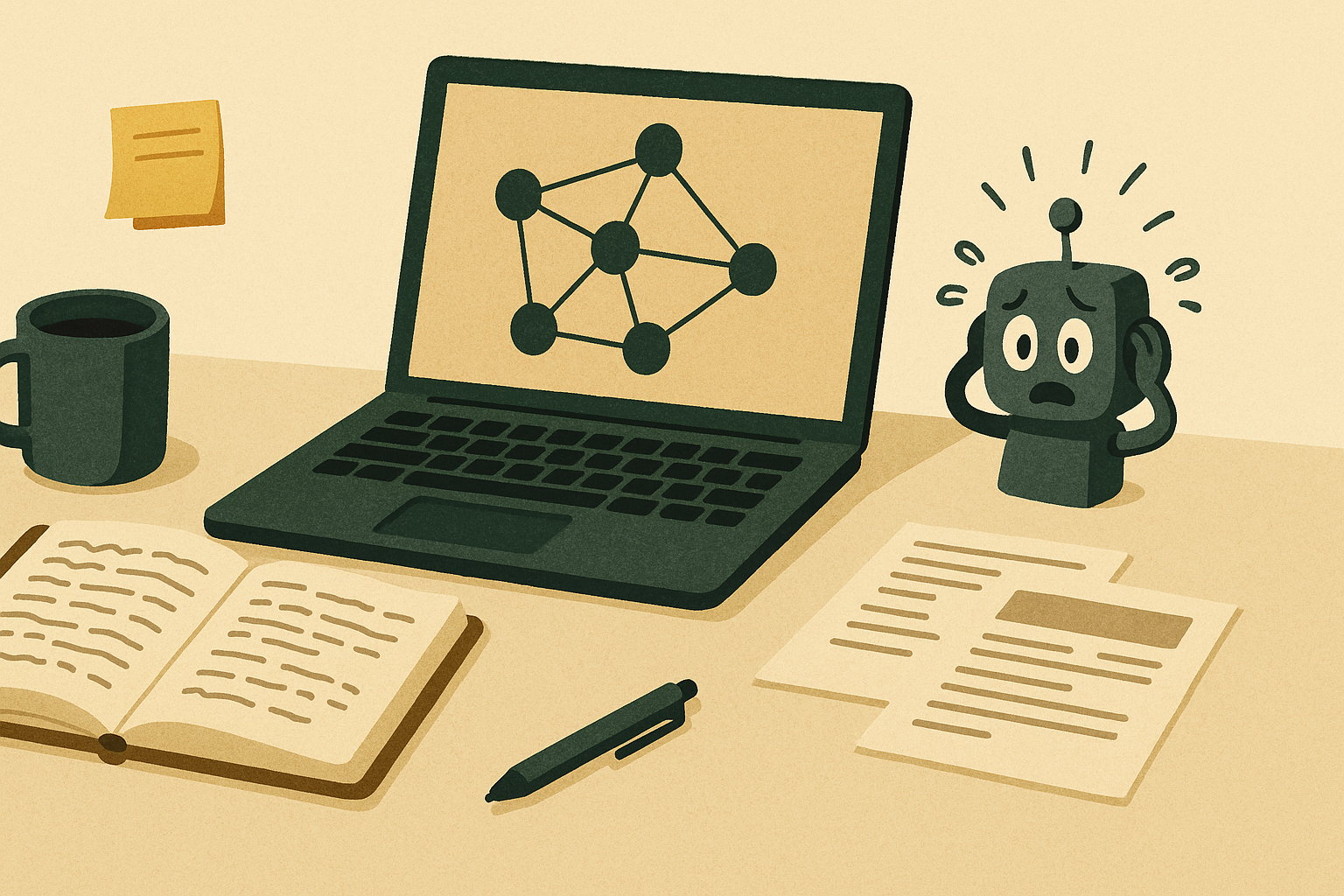
If you already built a second brain, the annoying part of AI is obvious immediately.
You already did the hard part. You captured the notes.
You saved the decisions.
You kept the research.
You wrote down the things future-you was not supposed to forget.
And then every new AI chat still starts with:
Okay, so here is the background...
Again.
And again.
And again.
There is a very specific kind of person who builds a second brain.
They do not just take notes.
They keep notes about books, meetings, client calls, doctor appointments, decisions, quotes, ideas, and half-finished thoughts with names like:
Random idea maybe important???
That is not entirely disorder. It is thoughtful chaos with a search bar.
Tools like Obsidian, Notion, Roam, Logseq, Apple Notes, Google Docs, and plain markdown files gave people a place to put the stuff their brains kept dropping on the floor.
That instinct is not weird. It lines up with a lot of the underlying memory literature: short-term capacity is limited, forgetting is normal, and people naturally rely on external systems to remember what matters. If you want the canonical references, this is the lane that runs through Miller on immediate memory limits, Murre and Dros on the forgetting curve, and Sparrow, Liu, and Wegner on digital external memory.
That was the first upgrade.
The second upgrade is making all that saved context usable by AI.
The old problem was storage
For years, the personal knowledge problem was mostly about where things should go.
Is this a project?
An area?
A resource?
An archive?
A tag?
A folder?
A backlink?
A database?
A dashboard?
A new system that will definitely fix everything this time?
No judgment. A lot of us have reorganized our notes instead of doing the thing the notes were supposed to help us do.
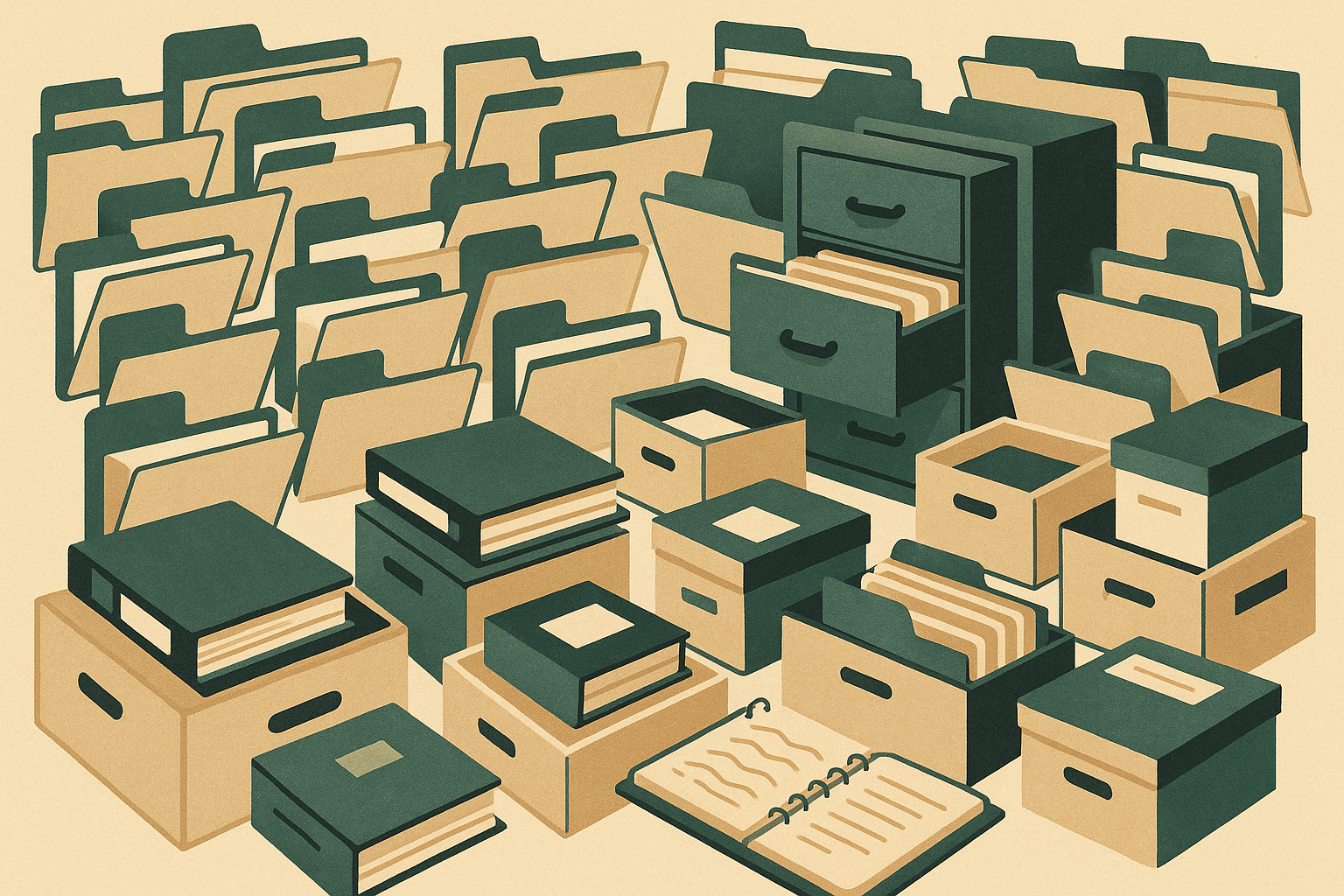
Tiago Forte's PARA method exists for a reason. Once people started saving real life instead of idealized categories, they needed a structure that could tolerate mess.
Second-brain tools helped us capture life as it actually happens.
Messy. Connected. Personal. Slightly embarrassing in places.
A dentist appointment can sit next to a journal entry.
A client decision can connect to a lesson learned the hard way.
A book highlight can resurface inside a business idea.
A random note from 2021 can suddenly become useful in 2026.
The value is not perfect organization.
The value is useful resurfacing.
The new problem is recall
You can have years of notes and still open an AI tool that acts like it met you four seconds ago in an airport.
It does not know the project.
It does not know what you already tried.
It does not know what you rejected.
It does not know your writing style.
It does not know your constraints.
It does not know which old notes matter right now.
So you become the middleman.
You search your notes.
You copy the context.
You paste the context.
You trim the context because the prompt got too long.
You apologize to the AI like it has feelings.
That is not because AI is useless.
It is because your best context is sitting somewhere else.
Most AI tools do not need a better prompt. They need better memory.
The Sparrow, Liu, and Wegner paper matters here too: when people expect information to remain accessible, they are less likely to remember the detail itself and more likely to remember where it lives. That is already how second-brain users operate. We are not trying to remember every detail. We are trying to build a place we trust.
The problem is the handoff.
Your notes are passive. Your AI needs context
Most note systems are excellent at waiting.
They wait for you to search.
They wait for you to remember the note exists.
They wait for you to open the right folder.
They wait for you to connect the dots again.
That is fine when you are the only one using the system.
It breaks down when the thing helping you is an AI assistant.
If the assistant is going to help you write, plan, code, research, organize, or make decisions, a blank chat box is not enough. It needs context.
Not all context. That would be awful.
Nobody wants an AI assistant interrupting a strategy session with:
I found a grocery list from March 2020. Would that help?
Good memory is selective.
It knows what matters.
It knows when it matters.
It knows what to ignore.
It knows what should stay private.
It knows what should be easy to delete.
| System | What it does |
|---|---|
| Notes app | Stores information |
| Second brain | Connects information |
| AI memory layer | Reuses information in context |
The next step is not more notes. It is better recall.
Second-brain people already understand the bigger idea
If you use Obsidian, Notion, Roam, Logseq, or any serious note system, you already understand something a lot of AI tooling is only now rediscovering:
Memory is infrastructure.
Your notes are a record of what you noticed, what you cared about, what you were trying to solve, what you learned, and what you promised yourself not to forget next time.
Are all of those notes brilliant? Absolutely not.
Some notes are barely notes. Some are just cryptic messages from past-you like:
Look into that podcast thing.
But over time, even messy notes become a map.
A map of your work.
A map of your interests.
A map of your judgment.
A map of your life.
That is exactly the kind of map AI needs if it is going to become useful in a personal way.
Obsidian's own docs on graph view, backlinks, and linked notes make the same point in product terms: value comes from connection and resurfacing, not just storage.
The next mess is scattered AI memory
Every app wants to remember you now.
One tool remembers your tone.
Another remembers one project.
Another remembers a thread.
Another remembers your codebase.
Another has custom instructions.
Another has a workspace.
Another has a memory setting you forgot you turned on.
So now we are recreating the old problem with better branding.
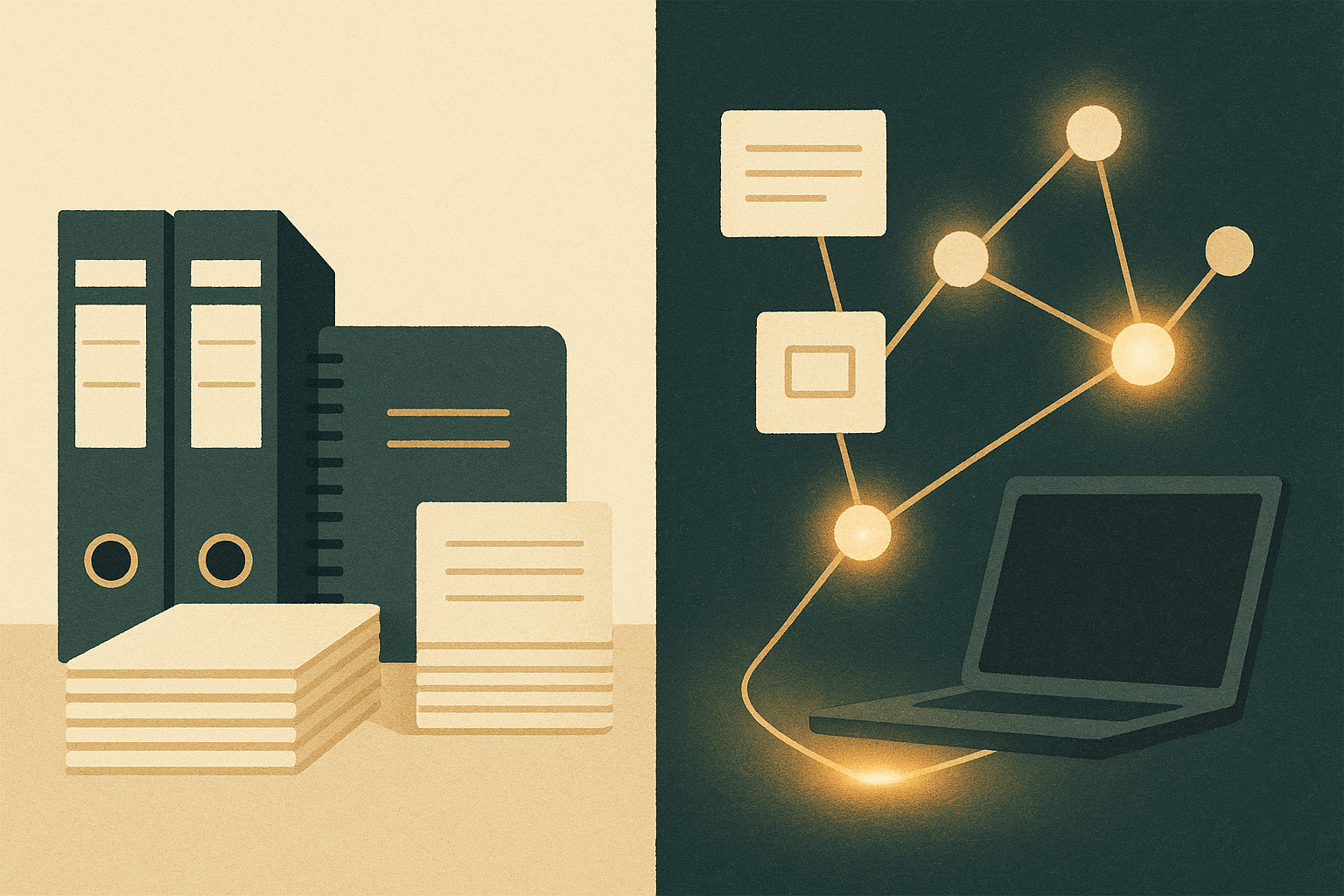
We used to have scattered notes.
Now we have scattered AI memory.
That is not the future. That is a junk drawer with a login screen.
If your memory only lives inside one app, your context is stuck there too.
Your preferences should move with you.
Your project history should move with you.
Your writing voice should move with you.
Your decisions should move with you.
Your lessons should move with you.
Because your memory is not an app feature.
It is yours.
If your AI memory cannot move with you, it is not really your memory.
That idea lines up cleanly with the broader literature on transactive memory systems: useful remembering is often about knowing what lives where and how to retrieve it through a shared system.
Empirical is not trying to replace your notes app
Empirical is not here to tell Obsidian users to stop using Obsidian.
That would be a fast way to start a fight with people who have strong opinions about local-first markdown, and honestly they would not be wrong.
Empirical is not trying to replace Notion, Obsidian, Roam, Logseq, Apple Notes, Google Docs, or whatever beautifully chaotic system you already trust.
The point is different.
Empirical is being built as a personal memory vault for AI.
Save important context once, then make it reusable across AI sessions and tools.
Your notes can still be your notes.
Your second brain can still be your second brain.
Empirical sits in the next layer.
The layer where the knowledge you already captured becomes usable context for AI.
Not another place to dump thoughts.
A way to help your AI stop starting from zero.
A simple example
Say you are working on a project.
You have notes about the original idea.
You have reasons you made certain decisions.
You have links to research.
You have things you tried that did not work.
You have a writing style you want to keep consistent.
You have lessons from the last time you worked on something similar.
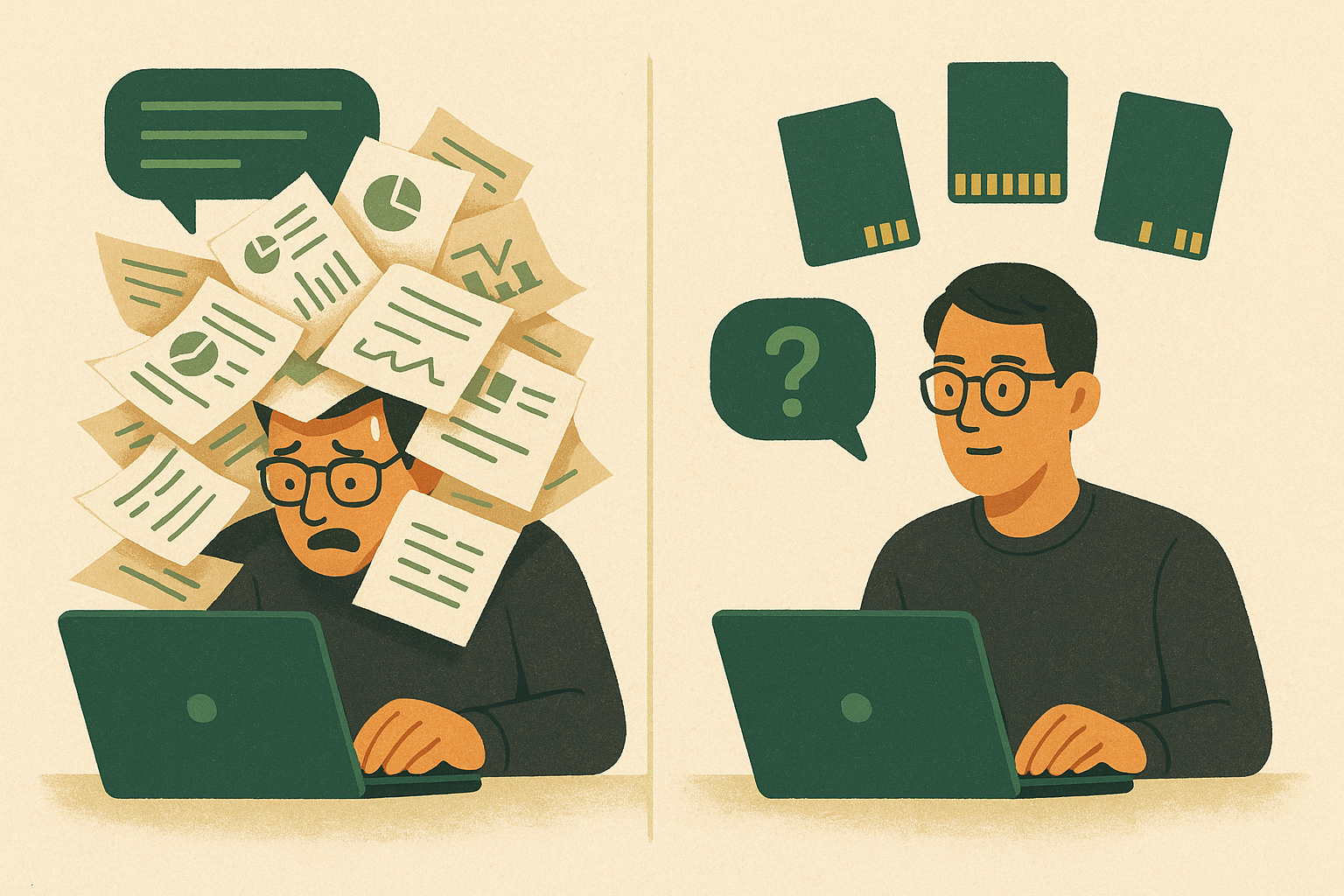
Today, a fresh AI chat usually gives you two bad options:
- Paste in a giant wall of context and hope for the best.
- Skip the context and get a beautifully written answer that is wrong in all the ways that matter.
With a real memory layer, the workflow should feel different.
You ask a normal question. The relevant context is available without rebuilding the entire backstory by hand.
Not because the AI magically knows everything.
Because you already captured the important stuff.
| Workflow | Manual context rebuilding |
|---|---|
| Fresh AI chat | High |
| Prompt template | Medium |
| Searching notes manually | Medium |
| AI memory layer | Lower |
The win is not that you never explain anything.
The win is that you stop explaining the same things over and over.
Good memory needs boundaries
A good AI memory system should not remember everything forever.
That is not productivity.
That is a haunted filing cabinet.
Some things should be saved.
Some things should fade.
Some things should stay private.
Some things should only apply to one project.
Some things should be easy to edit.
Some things should be easy to delete.
Some things should never be recalled unless you ask for them.
Memory without control gets creepy fast.
The better version is simple:
You choose what matters.
You control what gets saved.
You decide what can be recalled.
You can update it.
You can remove it.
You can take it with you.
The goal is not more memory. The goal is memory you control.
Your second brain was not the finish line
The second-brain movement taught people a better way to handle overloaded minds.
We stopped expecting ourselves to remember everything.
We built systems.
We captured ideas.
We connected thoughts.
We saved decisions.
We created places for useful fragments to land.
That was the first step.
The next step is making that saved context usable by the tools we are already asking to help us think.
Your second brain helped you remember.
Your AI memory layer should help you act.
So what is Empirical?
Empirical is a personal memory vault for AI.
It is for people who are tired of starting from zero every time they open a new AI chat.
It is for people who already save ideas, research, decisions, notes, and context because they know those things matter later.
It is for people who want AI tools to become more useful without handing their entire personal history to one platform.
It is for people who believe memory should be portable, editable, reusable, and owned by the person who created it.
If your second brain is where your knowledge lives, Empirical helps your AI know what to remember.
Not everything.
Not forever.
Not without boundaries.
Just the important stuff, available when it actually helps.
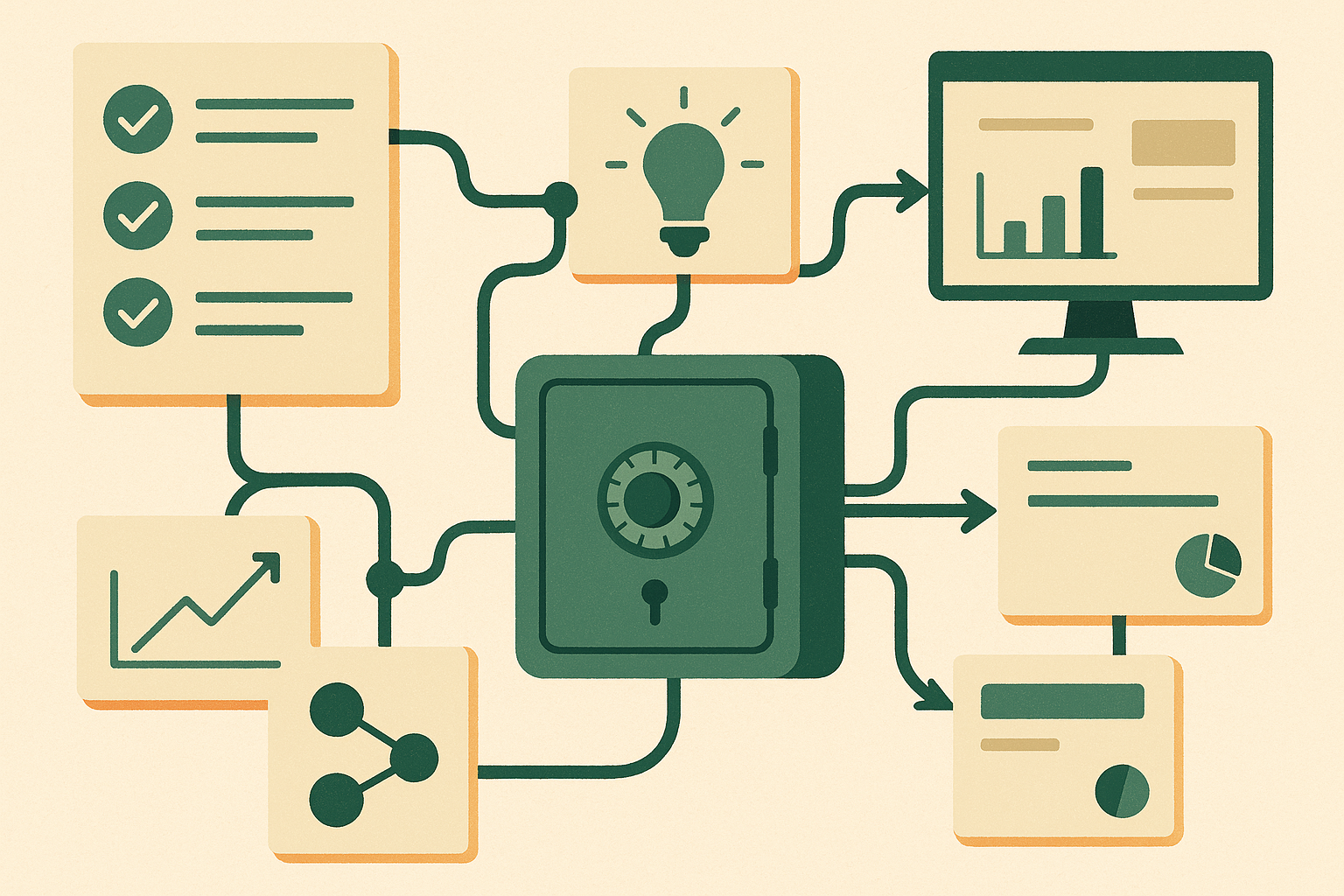
Your AI needs your second brain
We do not need another place to dump notes.
We have enough places to dump notes.
The real shift is that our notes are becoming more than an archive.
They are becoming context.
And context is what makes AI useful.
Not louder.
Not flashier.
Not more impressive in a demo.
More useful.
The best AI assistant is not the one that knows the most about the internet.
It is the one that understands enough about your world to stop making you repeat yourself.
That is what Empirical is building toward.
A memory layer for people who already understand why memory matters.
A way to help your AI use the knowledge you already captured.
A way to make sure your second brain does not stay trapped in a notes app.
Stop starting from zero.
Keep your notes where they already live. Let Empirical make the decisions, lessons, and preferences you saved available to the AI tools you already use.