Your AI coding agent needs scar tissue.
Context tells an agent what to do. Scar tissue reminds it what not to repeat.
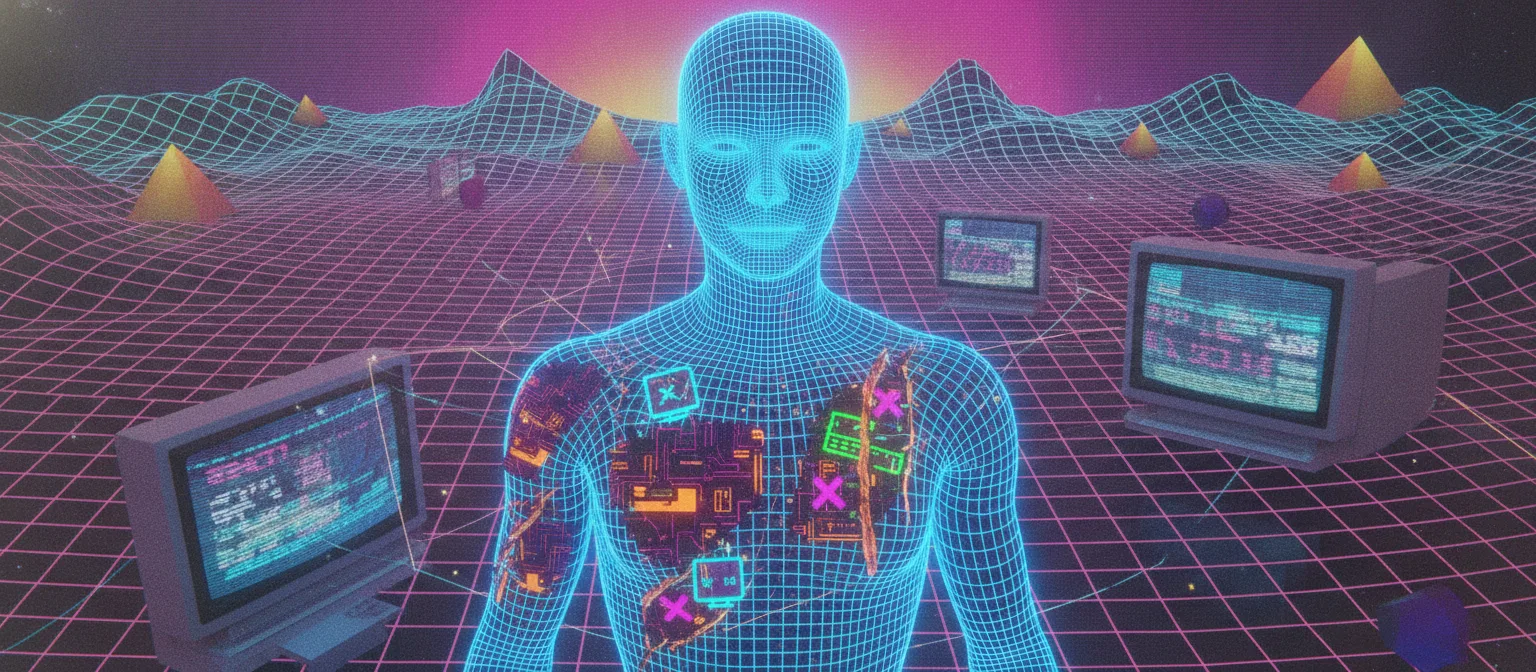
The most expensive AI coding mistake isn't the first bad suggestion. It's the second time the agent makes the same bad suggestion after you already corrected it. You paid for the first one with time. You pay for the second one with trust, and trust is harder to get back.
The first mistake is just a tool being wrong. That's fine. Every tool gets things wrong. The second mistake, the identical one, after an explicit correction, is something else. That's a tool that can't learn from your project. And in production codebases, with real conventions, real history, and real gotchas baked in over years, a tool that can't remember what you just taught it is a tool you can't fully rely on.
i.The loop most teams are stuck in
Here's the pattern: an AI coding agent surfaces something wrong. Maybe it's a migration approach that breaks your seeded data. Maybe it's an API route pattern your repo explicitly doesn't use. Maybe it's a dependency you tried and reverted six months ago for good reason.
You correct it. You explain the context. The agent adapts. The fix lands. Session ends.
Two days later, different task, fresh session. The agent suggests the same thing again. It has no record of what you told it. The correction you spent thirty minutes articulating never made it anywhere permanent. You're teaching the same lesson twice.
It isn't getting dumber. It's starting over. Every session is day one.
This is the loop. Developer corrects agent. Agent improves for the session. Session ends. Correction disappears. Agent regresses. Developer corrects again. The loop doesn't close. It just repeats.
ii.What's actually missing
The conversation around AI coding tools has been almost entirely about speed: faster suggestions, cheaper completions, more autonomous agents. And those things matter. But they're not the thing that makes developers stop trusting their tools.
What makes developers stop trusting their tools is when a tool keeps doing the thing you already told it not to do.
Humans become better developers because we carry scars. Not documentation. Not chat history. Actual, internalized memory of failure, the things we stopped doing because we did them once and it cost us. "Don't touch that migration without checking X." "This test passes locally but fails in CI because of Y." "We already tried this dependency and backed it out." That knowledge isn't written down anywhere. It lives in the people on the team, carried forward from the time it hurt.
AI agents do not just need memory. They need scar tissue.
Scar tissue is remembered failure. Not a style guide. Not a preferences file. Not a transcript of what was said. It's durable, structured memory of what went wrong, why it went wrong, and what should happen next time. It's the layer between "things the agent knows" and "things the agent learned the hard way."
iii.Why this matters now
This isn't a theoretical problem. AI coding agents are producing more code than most teams can manually review, and the gap is widening every month. The review process that used to catch repeated mistakes doesn't scale when the volume of AI-generated code is this high.
Research published in 2026 on memory for autonomous LLM agents puts it directly: memory is what turns a stateless generator into an adaptive agent. The papers specifically call out coding agents, long-horizon tasks, and contradiction handling as the areas where this gap matters most. A separate 2026 study on AI coding architectures frames it in practical terms: agents need infrastructure that separates always-loaded context from on-demand knowledge, and right now, almost none of them have it.
Safer AI coding won't come from better reviews alone. It will also come from agents that remember the mistakes they've already been taught not to make.
iv.The pattern, before and after
The broken loop has a very specific shape. You can watch it happen in slow motion across any codebase where an agent has been in use for more than a few weeks.
v.What scar memories actually look like
These aren't preferences. They aren't documentation. They're operational knowledge, the kind that usually only lives in a senior developer's head, or gets rediscovered the expensive way. Here's what a set of real scar memories might look like for a production codebase:
prisma migrate reset in this environment. It wipes seeded local workflow data. Use the seed script directly./app routes. Do not introduce API routes unless explicitly requested, it breaks the auth middleware chain.sharp for image processing. It causes native dependency build failures on Vercel. We reverted it in March. Use @squoosh/lib.None of these would make it into a style guide. Most of them wouldn't make it into AGENTS.md, either, they're too specific, too contextual, too much the product of a particular bad afternoon. But every experienced developer on a team knows a version of each of these. The agent doesn't, unless there's somewhere for that knowledge to live.
vi.Judgment, not just context
There's a distinction worth drawing here. The conversation around context windows is about efficiency, how much can the agent hold in mind at once. That's a real problem. But scar tissue is about something different.
It's about judgment.
Developers don't just want their agent to use fewer tokens. They want it to stop doing dumb things twice. They want it to approach a task carrying the same accumulated caution a senior developer would, not because it read a document, but because it remembers what happened last time.
It's not documentation.
Docs describe intent. Scar tissue describes failure. The agent needs both, but it especially needs the second one, because that's the kind no one thinks to write down.
It's not just context.
Shoving everything into a context window is brute force. Scar tissue is selective: it surfaces the right memory at the right moment, when the agent is about to make the same mistake.
It outlasts any session.
The chat ends. The correction disappears. The scar doesn't. Empirical holds the lesson outside the conversation so it can come back the next time it's needed.
Empirical isn't just a memory layer for things you like. It's a mistake memory layer, the place where the lessons that usually vanish at session end actually stick. The future of AI coding isn't just agents that can write code. It's agents that can remember why the last fix failed.
Give your agent a memory for failure.
Empirical stores the corrections, the gotchas, and the "never do that again" moments so your agent carries them into the next session and every session after that.